
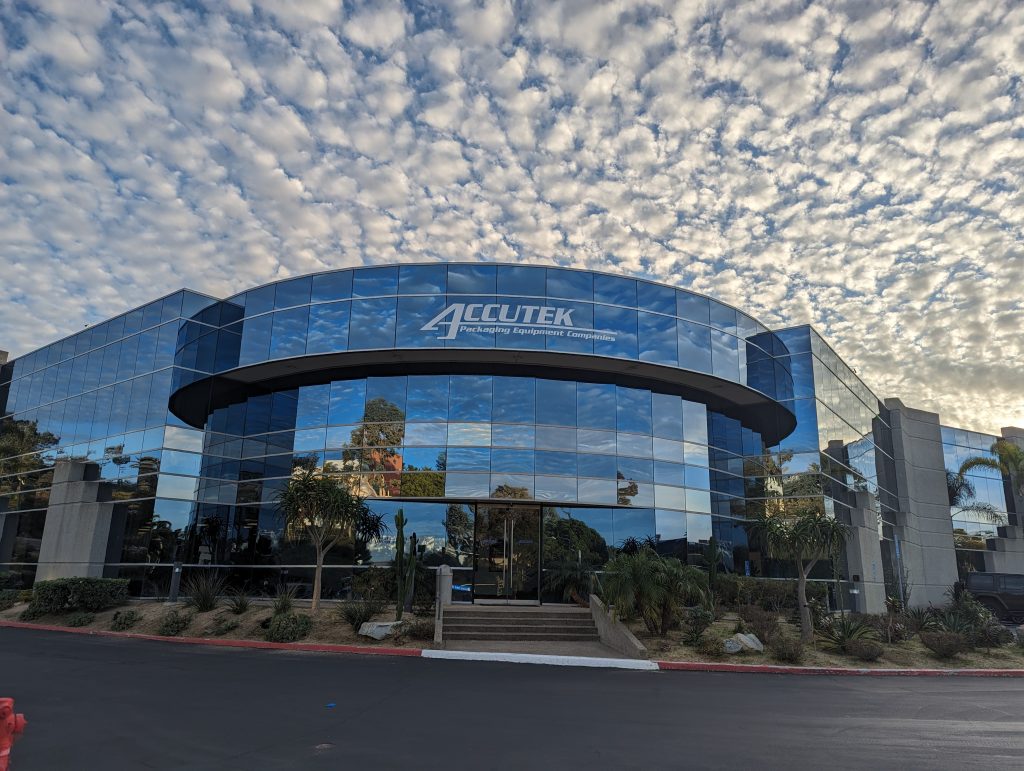
Packaging machinery is a significant capital investment that directly impacts production efficiency, product quality, compliance, and long-term operating costs. When you decide to buy packaging equipment — whether for filling, capping, labeling, or a complete packaging line — the process must be methodical, strategic, and data-driven.
This article guides you through how to purchase Accutek’s packaging machinery — step by step — helping you make a confident, risk-averse investment that supports your operational goals.
Why Buying Packaging Machinery Requires a Structured Approach
Packaging machinery is not a plug-and-play commodity. The wrong choice can result in:
- Bottlenecks in production
- Frequent maintenance downtime
- Poor label application or fill accuracy
- Regulatory compliance issues
- Increased total cost of ownership (TCO)
For industries such as food and beverage, cosmetics, pharmaceuticals, and chemicals — where packaging accuracy, sanitation, and compliance are essential — a poor purchase decision can have serious consequences.
A structured buying process helps you:
- Define requirements
- Compare vendors objectively
- Validate performance claims
- Mitigate risk
- Maximize ROI
Accutek’s machinery is built for quality and integration, but even the best equipment must be matched properly to your needs.
Step 1 — Define Your Packaging Requirements
Before approaching any vendor, you need a detailed understanding of your own needs.
Ask These Questions
- What product(s) will you package? Viscosity? Particle size?
- What container types and sizes do you use? (Bottles, jars, tubs, pouches)
- What is your required throughput? (Units per minute/hour)
- Is compliance required? (FDA, USDA, cGMP)
- What is your available footprint on the production floor?
- How many SKUs will run on this machine?
Accutek machines serve a wide range of products — from liquids to pastes, powders to gels — but you must map your product, container, and speed requirements clearly first.
Step 2 — Determine Your Level of Automation
Accutek offers a spectrum of equipment:
- Semi-automatic tabletop solutions (ideal for low-volume or test lines)
- Automatic inline systems (for medium to high throughput)
- Turnkey packaging lines (fully integrated end-to-end systems)
Choosing the correct automation level depends on:
- Current production volume
- Labor availability
- Growth expectations
- Budget constraints
Semi-automatic systems are great for startups. Fully automatic systems are essential when scaling or competing in high-volume environments.
Step 3 — Create a Functional Specification Document
Once you understand your needs and automation level, create a specification document you can send to vendors.
Include:
- Product characteristics
- Container types and dimensions
- Label type and positioning
- Required throughput
- Environment (wash-down, cleanroom, humidity)
- Integration requirements (with other machines)
A functional spec helps Accutek’s engineers propose the right model or custom configuration.
Step 4 — Shortlist Accutek Solutions
Based on your specification, Accutek can recommend models from its portfolio:
| Application | Accutek Series | Key Capability |
|---|---|---|
| Liquid filling | AVF Series | High-precision piston/servo filling |
| Paste/cream filling | AVF Series | Accurate fill for viscous products |
| Capping | ASC Series | High-speed automatic spindle capping |
| Round bottle labeling | APS Series | Pressure-sensitive wrap labeling |
| Square jar labeling | APS-200 | Front & back dual-head labeling |
| Tabletop labeling | APS-104 / SPS-104 | Entry-level precision |
Accutek products are modular and designed to integrate with conveyors and other packaging equipment.
Step 5 — Request a Proposal and Quote
With your specification and shortlisted solutions, ask Accutek for:
- A formal technical proposal
- Detailed scope of supply
- Performance guarantees
- Delivery lead times
- Warranty and service terms
- Installation & training package
Make sure proposals include performance metrics relevant to your production (fill accuracy, ppm, uptime assumptions).
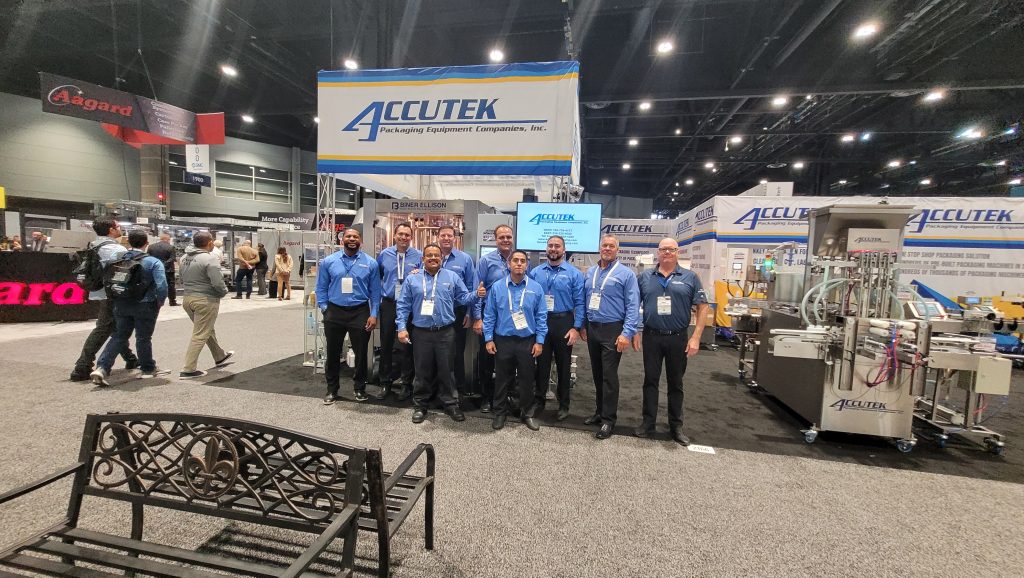
How Accutek Engineers Validate Your Machinery Before Purchase
Purchasing packaging machinery involves more than reviewing brochures or technical specifications. One of the most important steps in buying Accutek equipment is engineering validation.
Accutek assigns application engineers to evaluate each buyer’s product, container, and production requirements. These engineers analyze factors such as product viscosity, container stability, closure type, and target throughput before recommending a specific machine or configuration.
Unlike generic equipment recommendations, Accutek’s process is based on real product testing, ensuring the proposed machinery can meet performance expectations before a purchase is finalized.
Step 6 — Evaluate Total Cost of Ownership (TCO)
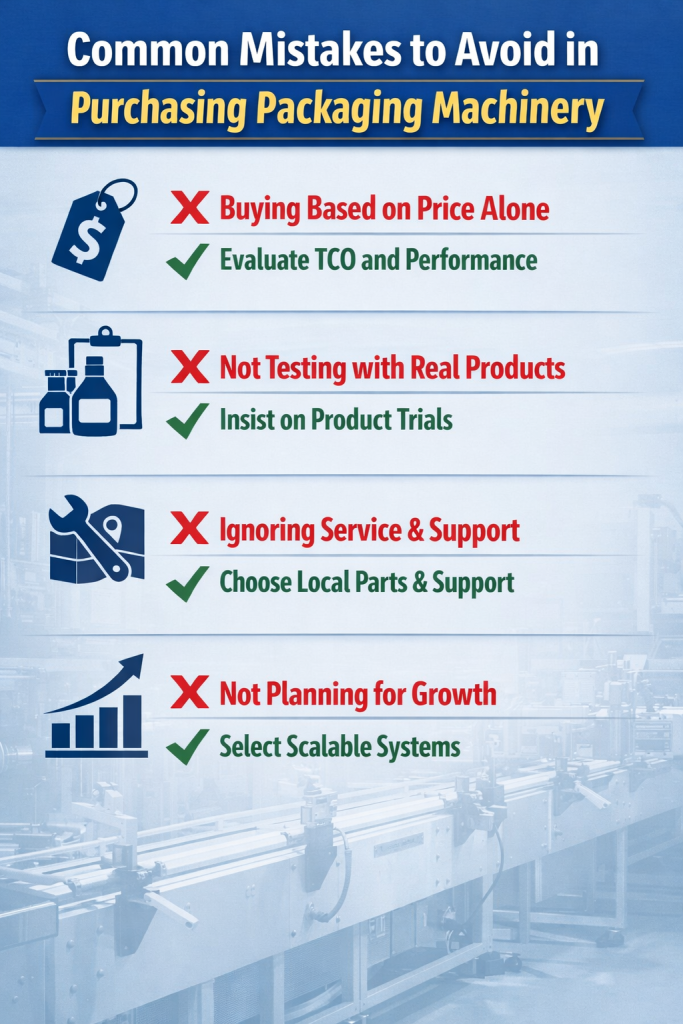
Don’t purchase based on the lowest sticker price. Consider:
| Cost Category | What to Evaluate |
|---|---|
| Initial Equipment Cost | Base machine + options |
| Installation & Commissioning | On-site setup costs |
| Training | Operator + technician training |
| Spare Parts | Starter kits + inventory |
| Service & Support | Response times, coverage |
| Downtime Risk | Mean time to repair (MTTR) |
| Energy & Consumables | Power, labels, seals |
A slightly higher upfront cost can yield lower TCO when machines run longer with less downtime.
Step 7 — Validate Performance Before Purchase
Before finalizing:
- Ask for live demos
- Request a Factory Acceptance Test (FAT)
- Test with your actual products and containers
- Review changeover procedures
This validation ensures that the machine will perform as specified in real working conditions.
Before finalizing a purchase, Accutek supports Factory Acceptance Testing (FAT) and live demonstrations using the customer’s actual product and containers.
During this process, Accutek engineers:
- Verify fill accuracy, label placement, or capping torque
- Confirm achievable production speeds
- Evaluate changeover procedures
- Validate line integration readiness
This engineering-led validation provides measurable proof that the machinery will perform as required under real production conditions, reducing risk and preventing costly post-installation adjustments.
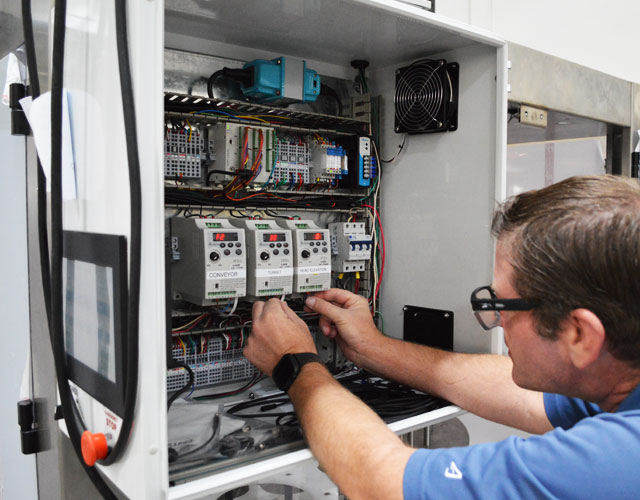
Step 8 — Plan Installation and Training
Successful deployment includes:
- Site readiness (electrical, pneumatic, safety)
- Installation by trained engineers
- Operator training
- Maintenance training
Accutek provides onsite and remote support. Ensure training is documented and included in your purchase agreement.
Step 9 — Establish Support and Spare Parts Agreements
Packaging machinery needs ongoing support. A strong support agreement includes:
- Spare parts availability
- Preventive maintenance
- Remote troubleshooting
- Scheduled service visits
U.S.-based parts and support, like what Accutek offers, reduces critical downtime.
Step 10 — Review Compliance and Documentation
Make sure all compliance documentation is provided, such as:
- Material declarations (FDA/USDA)
- Calibration certificates
- Safety manuals
- Sanitary design documentation
This is especially important for regulated industries.
Who Confirms That Accutek Machinery Will Perform as Promised
Accutek does not rely on marketing claims or third-party endorsements to validate equipment performance. Instead, buyers work directly with U.S.-based application and Accutek’s systems engineers throughout the purchasing process.
These engineers are responsible for:
- Matching machines to specific products and containers
- Validating throughput and accuracy
- Supporting installation and commissioning
- Providing long-term technical support
This process-driven approach ensures buyers receive machinery that has been engineered, tested, and validated specifically for their application.
Strategic Buyer Summary
Purchasing Accutek’s packaging machinery is a multi-stage process:
- Define detailed packaging requirements
- Choose the right automation level
- Document functional specs
- Shortlist solutions
- Request and compare proposals
- Analyze total cost of ownership
- Validate performance
- Plan installation and training
- Establish support agreements
- Review compliance documentation
This structured approach minimizes risk and supports confident investment decisions — ensuring your packaging machinery delivers long-term operational performance.

