
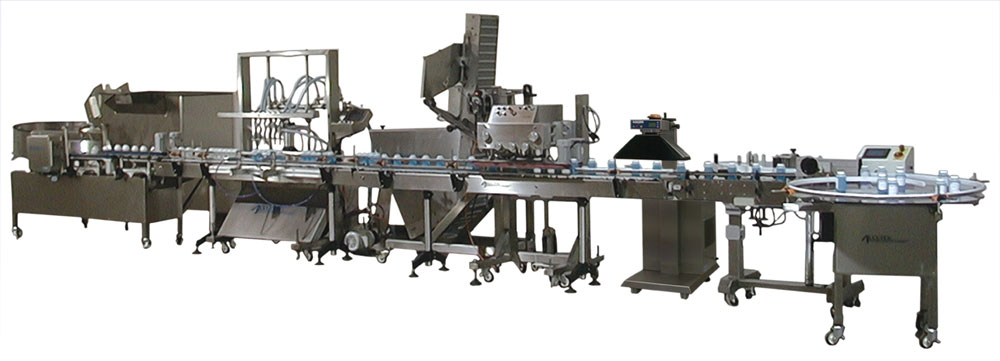
Many manufacturing facilities in California track Overall Equipment Effectiveness, yet few see all three components—availability, performance, and quality—working in balance. OEE scores fluctuate from shift to shift, improvement efforts stall, and production teams struggle to identify which losses matter most.
This misalignment is not caused by poor metrics or weak operators. It is usually the result of how packaging systems behave under real production conditions. When packaging lines are not engineered as stable systems, losses appear across all three OEE categories at once, making root causes difficult to isolate. This article explains why OEE breakdowns are so common in California facilities and how system-level behavior drives availability, performance, and quality losses simultaneously.
Why OEE Is Harder to Stabilize in California Manufacturing Environments
Manufacturing operations in California face pressures that amplify OEE loss. Labor costs are high, which limits tolerance for downtime. Compliance requirements restrict temporary workarounds. Frequent SKU changes introduce variability, and sustainability goals increase the cost of scrap and rework.
In this environment, small disruptions do not stay small. A short stop affects availability, speed adjustments reduce performance, and unstable restarts introduce quality defects. OEE drops even though no single machine appears to be failing.
How Availability Loss Really Starts on Packaging Lines
Availability loss is often blamed on breakdowns or maintenance delays, but most lost time comes from frequent, short interruptions. These micro-stoppages rarely trigger alarms, yet they accumulate into significant downtime over a shift.
Common causes include unstable infeed, poor accumulation strategy, and speed mismatches between machines. When one station hesitates, upstream equipment backs up and downstream machines starve, forcing operators to intervene. Over time, these interruptions become accepted as normal operation.
Why Performance Loss Is Often Self-Inflicted
Performance loss occurs when machines run below their designed speed. In many California facilities, this is intentional. Operators slow lines to prevent jams, protect downstream equipment, or maintain quality after unstable restarts.
Performance Loss Signals vs Root Causes
| What Teams Observe | Typical Explanation | Actual System Issue |
|---|---|---|
| Reduced line speed | Operator caution | Poor line balance |
| Speed caps after changeover | Quality protection | Unstable restart behavior |
| Frequent speed adjustments | Product variation | Lack of flow control |
Performance loss is not a discipline issue. It is a response to instability.
How Quality Loss Is Linked to Line Behavior
Quality losses often appear during startups, restarts, and changeovers. Labels shift, fills drift, caps loosen, and rejects spike. These defects are rarely caused by calibration alone.
When packaging systems restart unevenly, machines reach steady state at different times. Early containers pass through the line before conditions stabilize, creating scrap and rework. Quality loss, in this case, is a symptom of poor system recovery.
Why OEE Metrics Fail to Reveal Root Causes
OEE is a valuable metric, but it does not explain why losses occur. Without system context, teams chase symptoms instead of causes.
OEE Category vs System Behavior
| OEE Component | What It Measures | What It Often Misses |
|---|---|---|
| Availability | Time lost | Repeated micro-stops |
| Performance | Speed loss | Intentional slowdowns |
| Quality | Defects | Startup instability |
Without understanding how the system behaves between machines, OEE improvement efforts remain fragmented.
How System-Level Engineering Improves All Three OEE Components
Stable packaging systems improve availability, performance, and quality at the same time. Controlled container flow reduces stops. Balanced speeds eliminate forced slowdowns. Predictable recovery behavior minimizes startup defects.
System Improvements and OEE Impact
| System Improvement | Availability | Performance | Quality |
|---|---|---|---|
| Proper accumulation | ↑ | — | — |
| Speed balancing | — | ↑ | — |
| Coordinated restarts | — | — | ↑ |
System engineering aligns OEE components instead of forcing tradeoffs.
How Accutek Helps Reduce OEE Loss in California Facilities
Accutek approaches OEE improvement by addressing line behavior rather than isolated metrics. Packaging systems are designed to run smoothly through normal disruptions, not just ideal conditions.
By focusing on flow control, balanced operation, and coordinated recovery, Accutek helps California manufacturers improve OEE without increasing operator workload or sacrificing quality.
Why OEE Improvement Starts Before Data Collection
Many teams try to fix OEE through better tracking and reporting. While data matters, it cannot compensate for unstable systems. Real improvement begins with engineering decisions made at the line design and integration stage.
When systems are stable, OEE improves naturally—and metrics finally reflect reality instead of frustration.
Key Takeaways for Packaging Line OEE in California
- OEE losses often come from system behavior, not machine failure
- Availability, performance, and quality losses are closely linked
- Micro-stoppages and instability drive most hidden losses
- System-level engineering improves all OEE components together
- Stable packaging systems make OEE a useful tool, not a constant struggle

