
Engineering Systems That Support U.S. Manufacturers for Years, Not Just Installations
Many packaging lines perform well during their first year of operation, then gradually become harder to maintain, upgrade, and integrate as production requirements change. This decline rarely happens because machines wear out. More often, it happens because the control architecture was never designed for long-term supportability.
In packaging machinery, control architecture refers to how software, hardware, sensors, drives, and communication systems are structured to operate, diagnose, and evolve over time. For U.S. manufacturers—especially those in regulated and high-mix environments like California—control architecture determines whether packaging machines remain productive assets or become technical bottlenecks.
This article explains why control system design matters long after installation, where common assumptions break down, and how properly engineered control architectures support long-term reliability, diagnostics, and expansion.
Why Control Architecture Determines Long-Term Machine Value
Many buyers evaluate packaging machines based on mechanical performance and initial throughput. While these factors matter, long-term ownership costs are more strongly influenced by how easily machines can be:
- Diagnosed
- Updated
- Integrated with new equipment
- Maintained by in-house technicians
When control systems are proprietary, closed, or poorly documented, even small changes can require outside service support, extended downtime, or full control replacements.
Machines with flexible, transparent control architectures allow manufacturers to solve problems faster and adapt to new production demands without major system overhauls.
Where Common Assumptions About Controls Break Down
Control systems are often treated as interchangeable, but design decisions made early in engineering affect years of operation.
Common Beliefs vs. Long-Term Reality
| Common Assumption | What Actually Happens Over Time |
|---|---|
| “All PLC systems are the same” | Some limit integration and diagnostics |
| “If it runs now, it will be fine later” | Future upgrades may be impossible |
| “Service will handle software issues” | Delays and costs increase dependence |
| “Controls don’t affect scalability” | Poor architecture blocks expansion |
When control design is not considered part of the machine’s lifecycle, supportability becomes an afterthought instead of a built-in capability.
Engineering Control Architectures That Support Long-Term Operation
Supportable packaging machines are engineered with controls that are open, modular, and diagnosable.
Control Features That Improve Long-Term Supportability
| Control Architecture Feature | Operational Benefit |
|---|---|
| Open PLC platforms | Easier integration with future equipment |
| Modular I/O design | Simplifies upgrades and expansions |
| Standard industrial networks | Reliable communication across machines |
| Centralized diagnostics | Faster troubleshooting and maintenance |
| Remote support capability | Quicker resolution of complex issues |
These design choices reduce dependency on custom hardware and enable faster internal response to production problems.
Accutek Packaging Machine Control Design in Practice
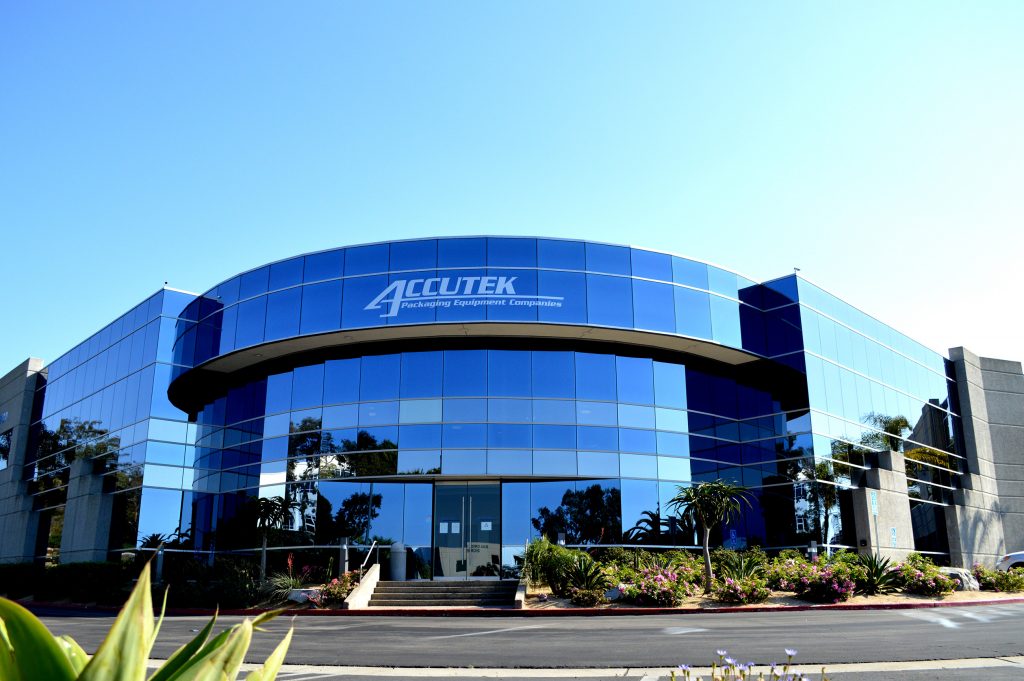
Accutek packaging machines are engineered using standardized, industry-recognized control platforms rather than closed proprietary systems. This approach supports:
- Easier integration of filling, capping, and labeling machines
- Consistent operator interfaces across the line
- Simplified maintenance training
- Expandability when production requirements change
For example, Accutek’s integrated packaging lines use coordinated PLC control structures that allow conveyors, filling machines, capping machines, and labeling systems to communicate using unified logic and synchronized motion control. This reduces fault isolation time and improves line-level diagnostics.
Instead of treating each packaging machine as an isolated unit, the control system is designed to manage the line as a connected production system.
Why Control Architecture Affects Scalability and Line Expansion
When manufacturers add new products, SKUs, or production shifts, control systems must accommodate:
- Additional sensors and stations
- New timing relationships
- Different container handling requirements
- Data integration with quality and tracking systems
Poorly designed control architectures may require:
- Full software rewrites
- Control panel replacements
- Separate control systems for new machines
Well-engineered systems allow new machines or modules to be added using existing network and logic structures, protecting earlier investments.
Control Systems and Regulatory Readiness
In industries common to California manufacturing—food, beverage, pharmaceuticals, and cosmetics—control systems also support:
- Traceability
- Alarm logging
- Process validation documentation
Supportable control architectures make it easier to:
- Retrieve production data
- Validate changes
- Demonstrate consistent operation during audits
This is not possible when control systems are fragmented or undocumented.
System-Level Control Design Prevents Line-Wide Downtime
Packaging machines rarely fail in isolation. Sensors, conveyors, and safety systems are interconnected.
Why System Control Matters
| Issue | Without Unified Controls | With Unified Controls |
|---|---|---|
| Fault detection | Operators guess which machine failed | Root cause is clearly identified |
| Restart after stoppage | Manual resets across machines | Coordinated restart sequences |
| Speed changes | Machines drift out of sync | Automatic line balancing |
| Preventive maintenance | Reactive scheduling | Data-driven maintenance planning |
Control architecture determines whether downtime spreads across the line or is contained to a single station.
What Control Architecture Really Means
Think of control architecture as the nervous system of the packaging line.
If every machine has its own isolated controls, information doesn’t flow well. Problems are harder to diagnose, and changes are harder to implement. If the nervous system is connected and standardized, the entire line responds together and problems are easier to trace.
Good control architecture means:
- Machines can “talk” to each other
- Technicians can understand what’s happening
- Future upgrades don’t require starting over
It doesn’t just keep machines running — it keeps operations adaptable.
Why Control Architecture Protects Long-Term Performance
- Control systems determine how easily machines can be maintained and upgraded
- Open, modular architectures reduce long-term ownership costs
- Integrated controls support line-level diagnostics and faster recovery
- Scalable control design protects investment as production evolves
- Supportable controls are essential for regulated manufacturing environments
For U.S. and California manufacturers planning for long service life and production flexibility, packaging machine control architecture is not just a technical detail — it is a core part of long-term operational reliability.

