
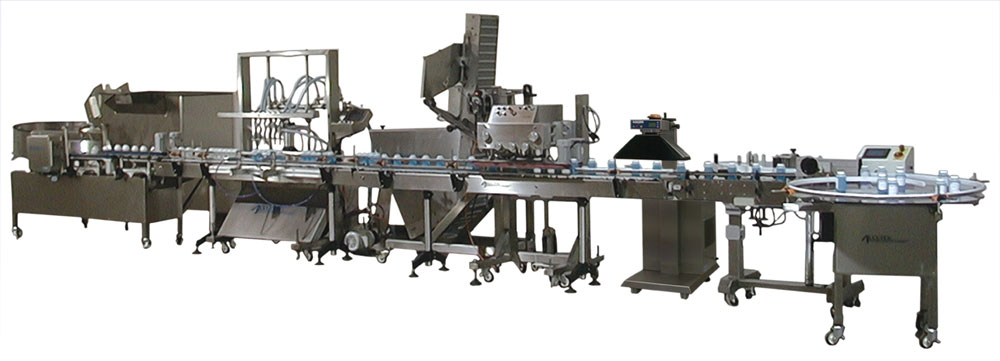
Modern packaging lines are faster than ever. Servo-driven fillers, high-speed cappers, and advanced labeling systems are capable of impressive output rates. Yet many manufacturers still struggle to hit daily production targets. The reason is often not machine speed—it’s changeovers.
As product lines expand and SKU counts grow, packaging line changeovers have quietly become one of the largest hidden drains on throughput. Each container size change, cap variation, label format, or product switch introduces downtime that compounds across the entire line. Over time, these interruptions can cost hours of production per shift.
Manufacturers that design packaging lines one machine at a time often underestimate this impact. Companies like Accutek Packaging Equipment Company, Inc., which engineer complete filling, capping, labeling, and conveyor systems, encounter this challenge frequently in high-mix, high-SKU environments.
The Real Cost of Packaging Line Changeovers
Changeovers rarely appear catastrophic on paper. A few minutes adjusting guides here, recalibrating fill volumes there—it seems manageable. But across multiple machines, the lost time adds up quickly.
Common changeover-related losses include:
- Extended line downtime between runs
- Increased scrap during setup
- Inconsistent first-run quality
- Operator fatigue and variability
- Missed production targets
In facilities running multiple SKUs per shift, changeovers can account for 20–40% of total available production time.
Why Changeovers Take Longer Than Expected
The root problem is rarely operator skill. In most cases, extended changeovers are a design issue, not a people issue.
Accutek engineers often find that legacy packaging lines were built for:
- Long, uninterrupted production runs
- Minimal container variation
- Fixed mechanical adjustments
When those same lines are forced to support frequent SKU transitions, inefficiencies surface immediately.
Common Causes of Extended Changeovers
| Changeover Issue | Root Cause | Throughput Impact |
|---|---|---|
| Manual mechanical adjustments | Fixed tooling and hand-set components | Long setup times, operator variability |
| Recalibration at each machine | No shared datum or synchronized settings | Cascading delays across the line |
| Trial-and-error setup | Lack of stored recipes or presets | Increased scrap and rework |
| Operator-dependent processes | No standardized changeover procedure | Inconsistent run quality |
Why “Quick Fixes” Rarely Work
Many manufacturers attempt to shorten changeovers by:
- Adding more operators
- Rushing adjustments
- Skipping validation steps
While these tactics may reduce downtime temporarily, they often introduce new problems—fill inaccuracies, sealing failures, or labeling defects—that result in line stoppages later.
True changeover efficiency is not achieved by working faster, but by engineering changeovers out of the process.
Engineering Packaging Lines for Faster SKU Transitions
High-performing packaging lines are designed with changeovers in mind from day one. This requires a system-level approach rather than isolated machine upgrades.
Accutek incorporates several key engineering principles into its filling, capping, labeling, and conveyor systems to support rapid, repeatable SKU transitions.
Engineering Strategies That Reduce Changeover Time
| Engineering Strategy | How It Helps |
|---|---|
| Tool-less adjustment points | Eliminates manual tools and reduces setup complexity |
| Servo-controlled systems | Enables precise, repeatable positioning |
| Stored recipes and presets | Allows fast recall of proven configurations |
| Modular tooling | Simplifies swaps between container formats |
| Adjustable conveyor guides | Prevents bottlenecks during container transitions |
When these elements are applied across the entire line—not just one machine—changeover time drops dramatically.
The Importance of Line-Level Synchronization
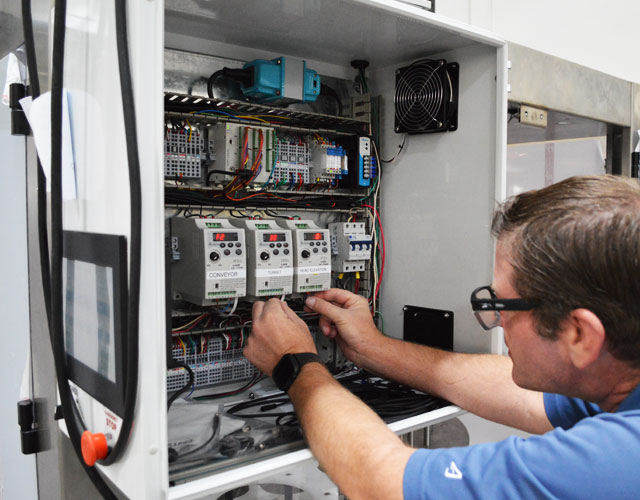
One of the most overlooked contributors to long changeovers is lack of synchronization between machines.
For example:
- A filler may complete its setup quickly
- A capper may require additional mechanical adjustment
- A labeler may need trial runs to realign
If these machines are not engineered to transition together, the slowest adjustment dictates when the line can restart.
Accutek’s line-level engineering approach focuses on:
- Common reference points across machines
- Coordinated adjustment ranges
- Consistent operator interfaces
This reduces the “domino effect” that often extends changeovers far beyond expectations.
Real-World Impact of Changeover Optimization
When SKU transitions are engineered correctly, manufacturers see measurable results.
Throughput Improvements After Changeover Optimization
| Area of Improvement | Typical Result |
|---|---|
| Changeover duration | 30–60% reduction |
| First-run scrap | Significant decrease |
| Line restart consistency | Faster stabilization |
| Operator training time | Reduced dependency on experience |
| Overall line OEE | Noticeable improvement |
For example, servo-controlled filling and capping systems with stored recipes allow operators to recall preset configurations for different container sizes, reducing manual adjustments during SKU transitions and minimizing startup errors.
Changeovers as a Scalability Issue
SKU growth is a sign of business success—but only if the packaging line can scale with it.
When SKU expansion outpaces line design:
- Changeovers become longer
- Throughput declines
- Production planning becomes reactive
Accutek works with manufacturers to evaluate existing packaging lines, identify changeover bottlenecks, and engineer scalable solutions that support both current production and future product expansion.
Key Takeaways for Packaging Line Changeovers
- SKU changeovers often reduce throughput more than machine speed limitations
- Extended changeovers are usually caused by line design, not operator performance
- Tool-less adjustments, servo controls, and stored recipes significantly reduce downtime
- Packaging lines engineered for flexibility scale more efficiently as SKU counts grow
- Accutek’s system-level engineering approach helps manufacturers design lines that support rapid, repeatable changeovers

