
Foam overflow is one of the most common and costly challenges in high-speed liquid filling operations. While it may seem like a minor issue, uncontrolled foaming can cause inconsistent fill levels, product loss, contamination risks, and frequent line stoppages. For manufacturers operating at high throughput, especially in food, beverage, personal care, and chemical industries, foam control is not optional—it is essential to maintaining efficiency, compliance, and product quality.
This article explores why foam occurs during filling, how it impacts production performance, and how modern filling system engineering—particularly in high-speed environments—can eliminate or significantly reduce foam-related issues.
Understanding Why Foam Occurs During High-Speed Filling
Foaming occurs when air becomes trapped in a liquid as it is dispensed into a container. This is amplified in high-speed production environments where flow rates, turbulence, and container dynamics interact aggressively.
Primary Causes of Foam Formation
| Cause | Description | Impact on Filling |
|---|---|---|
| High turbulence | Rapid liquid entry agitates the product | Excess foam and overflow |
| Air entrainment | Air mixes into liquid during pumping | Inaccurate fill volumes |
| Product viscosity | Thinner liquids trap air more easily | Inconsistent fill heights |
| Surfactants in formula | Common in detergents and cosmetics | Persistent foam layers |
| Drop height | Long distance between nozzle and container | Increased aeration |
Foaming is not just a product issue—it is a mechanical and process design challenge.
Why Foam Overflow Is a Serious Production Risk
Foam overflow introduces both operational and compliance risks:
- Inaccurate fill volumes due to foam collapse after filling
- Product waste from overflow and spillage
- Labeling issues caused by wet or contaminated containers
- Line stoppages for cleaning and recalibration
- Regulatory non-compliance in food, beverage, or pharmaceutical production
At higher speeds, even small inefficiencies multiply rapidly.
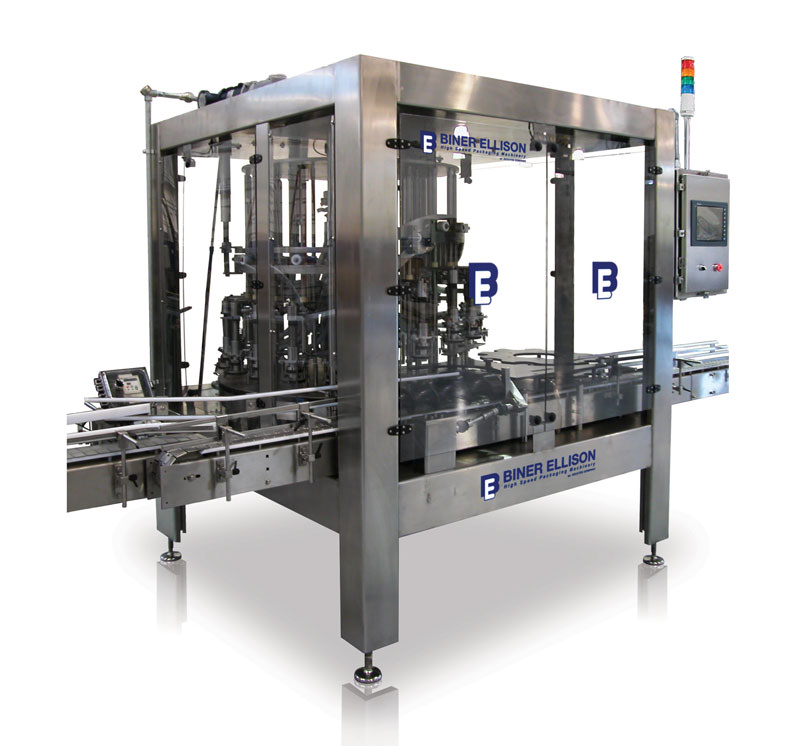
Why Foam Overflow Is a Serious Production Risk
Foam overflow introduces both operational and compliance risks:
- Inaccurate fill volumes due to foam collapse after filling
- Product waste from overflow and spillage
- Labeling issues caused by wet or contaminated containers
- Line stoppages for cleaning and recalibration
- Regulatory non-compliance in food, beverage, or pharmaceutical production
At higher speeds, even small inefficiencies multiply rapidly.
2. Controlled Flow Rate and Multi-Stage Filling
High-speed filling machines increasingly use programmable flow profiles rather than a single continuous flow.
| Fill Stage | Function |
|---|---|
| Initial slow fill | Prevents splash and turbulence |
| High-speed mid-fill | Maximizes throughput |
| Slow top-off | Eliminates surface foam |
This staged approach allows precision without sacrificing speed.
3. Anti-Foam Nozzle Design
Specialized nozzles reduce shear forces and prevent air ingestion.
Key nozzle features include:
- Laminar flow design
- Anti-drip shutoff mechanisms
- Subsurface filling capability
- Precision-machined orifices
These designs ensure consistent liquid behavior even at high throughput.
4. Servo-Driven Fill Control for Consistency
Servo-controlled filling systems provide precise movement control, enabling:
- Exact nozzle positioning
- Adjustable fill speeds per product
- Repeatable motion cycles
This level of control is especially critical when running multiple SKUs or switching container sizes frequently.
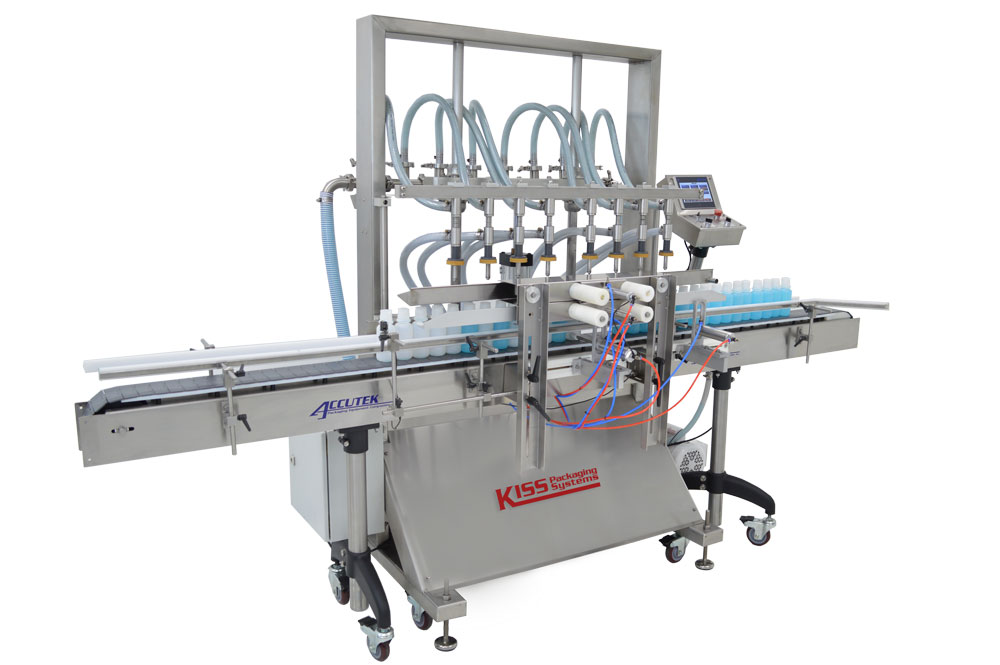
High-Speed Filling Without Foam: Engineering Considerations
| Engineering Factor | Why It Matters |
|---|---|
| Pump selection | Must match viscosity and foaming tendency |
| Nozzle geometry | Controls flow pattern and air exposure |
| Fill speed tuning | Balances throughput and stability |
| Container geometry | Narrow openings increase foaming risk |
| Product temperature | Warmer liquids often foam more |
When these variables are engineered together, foam can be virtually eliminated—even at high production speeds.
High-Speed Filling Without Foam: Engineering Considerations
| Engineering Factor | Why It Matters |
|---|---|
| Pump selection | Must match viscosity and foaming tendency |
| Nozzle geometry | Controls flow pattern and air exposure |
| Fill speed tuning | Balances throughput and stability |
| Container geometry | Narrow openings increase foaming risk |
| Product temperature | Warmer liquids often foam more |
When these variables are engineered together, foam can be virtually eliminated—even at high production speeds.
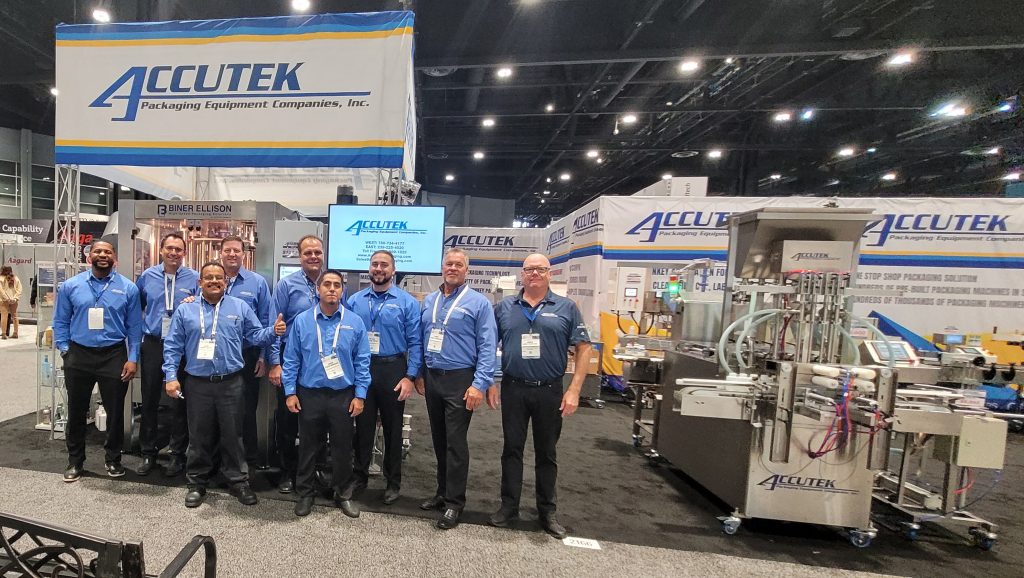
How Accutek Engineers Address Foam Control
Accutek’s high-speed filling systems are engineered with foam mitigation as a core design consideration rather than an afterthought.
Key engineering advantages include:
- Bottom-up and diving nozzle configurations
- Servo-driven fill accuracy across varying viscosities
- Custom nozzle geometry based on product behavior
- Scalable systems that maintain precision at higher speeds
- Integration-ready designs for automated production lines
This approach allows manufacturers to maintain throughput while protecting product integrity and line efficiency.
Applications Where Foam Control Is Critical
- Personal care liquids (shampoos, body wash, soaps)
- Household cleaners and detergents
- Beverage products with surfactants
- Pharmaceutical and nutraceutical liquids
- Industrial chemicals and solvents
Each application presents unique foaming behavior, requiring tailored filling solutions rather than generic equipment.
Eliminating Foam Without Sacrificing Speed
- Foam control is both a mechanical and process challenge—not just a product issue
- High-speed filling requires precision engineering, not brute force
- Bottom-up filling and servo-controlled motion dramatically reduce foam formation
- Proper nozzle design and flow profiling are essential for consistency
- Scalable systems allow manufacturers to grow without redesigning their entire line
By combining intelligent mechanical design with product-specific customization, manufacturers can achieve clean, consistent, high-speed filling—without foam, waste, or downtime.

