 (760) 734-4177
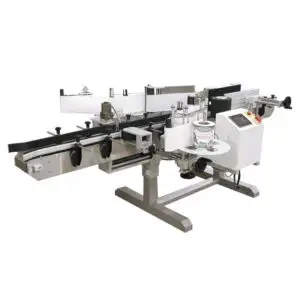
Like picking ingredients for your latest brew, there are a lot of factors at play when choosing a labeling machine for your custom craft beer products. Alas, there’s no one type of machine you can point to and exclaim, “Aha! This one’s perfect for my hazy IPAs!” You need to consider factors like your container’s physical characteristics, how much you can afford to spend on labor, and your required production speed, among other factors.
Luckily, here at Accutek Packaging, we have the customizable equipment that’s guaranteed to meet your needs. Our labelers have been tried and tested on all sorts of bottles and cans—you can even see a few of our past clients’ labeled containers on display at our building.
This article will answer your questions about what kind of labeler is best for your craft business and aims to help you learn more about labeling machinery. Let’s take a deeper look at what types of container labelers there are and how they can meet your craft beer needs.
Types of Labelers for Your Craft Beer
Auto vs Semi-Auto
If you want to know what kinds of labeling machines there are, we have an entire page dedicated to just that, along with an article comparing automatic and semi-automatic labelers. So feel free to take a few minutes to look that over before coming back here. But if you feel like staying, then let’s break the topic down real quick.
The major difference between semi-automatic and automatic labelers usually comes down to their size. Semi-auto labelers, like Accutek’s SPS-104, tend to be smaller and more portable. (Don’t get us wrong, they’re still heavy and we don’t recommend moving them without the help of a cart or a coworker, and maybe some steel-toed shoes.) This comes with the upside that they tend to be cheaper and take up less space on your production floor.
But they’re not quite as robust as their automatic counterparts, which aren’t coming off the floor without a forklift. Automatic labelers use rollers and/or belts to orient the containers for optimal labeling. Automatic labelers can also handle larger custom labels and are easy to pair with other machinery.
Like the semi-auto labelers, they’re outfitted with conveyors to convey your craft brews from one station to another. At this point, they’re probably coming from the capping stage and heading to the end of the line.
Choosing the right kind of labeler comes down to what you think will best fit your production needs. Are you just labeling a few cans an hour? Is your brewery on the smaller side? You may need a tabletop semi-automatic labeler for your brewpub.
Or are you labeling foot-high growlers and crowlers, and/or are you in such high demand that you need to get your brews out the door and onto shelves as soon as possible? Then it’s probably time to invest in an automatic labeler to give you an edge in the craft beer market.
Major Types of Custom Beverage Labelers
Some types of labelers include pressure-sensitive labelers, hot glue labelers, and sleeve labelers.
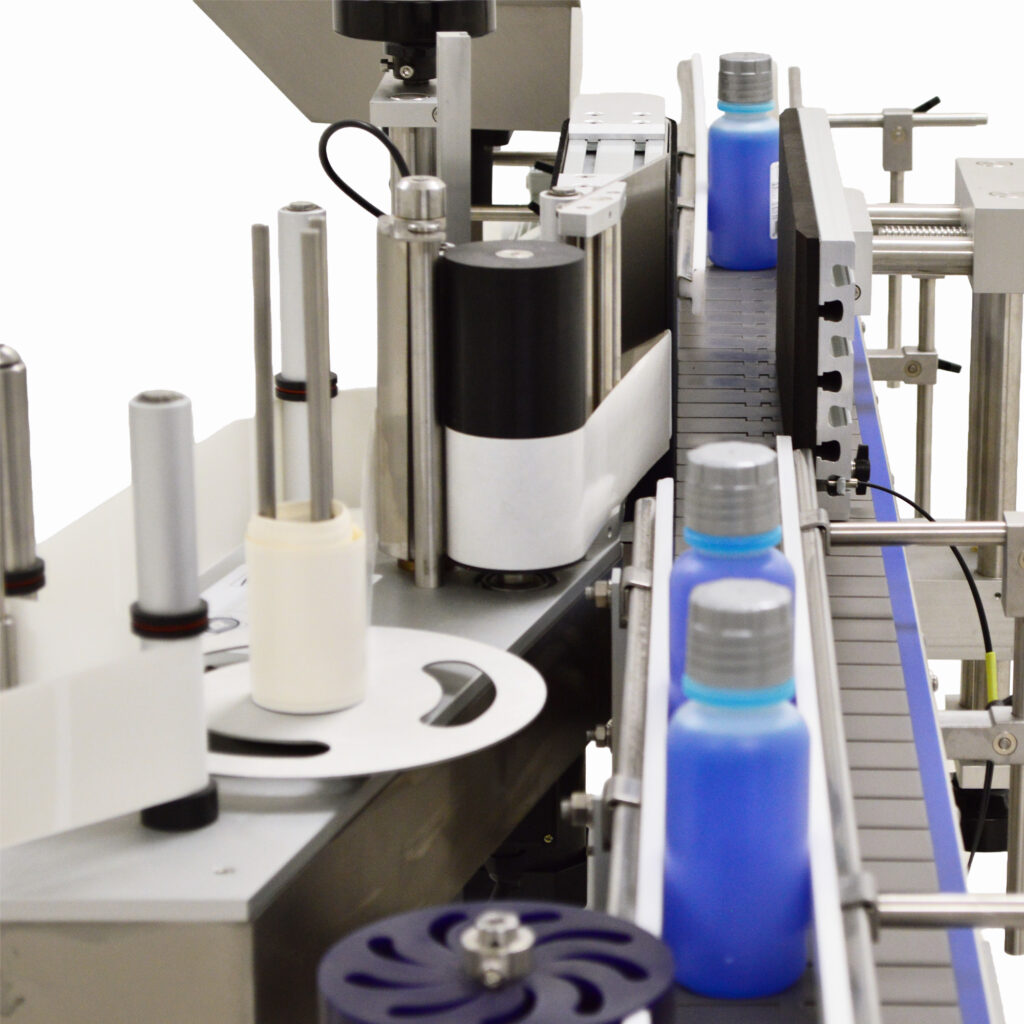
Pressure-sensitive labelers are usually used for bottles, jars, and other containers. They place pre-adhesive labels onto containers via pressure.
Picture a container moving down a conveyor before catching a label sticking out of a reel. Once it catches the label, the container is sandwiched between a foamed pad and roller, which keep it in place and wrap the label all the way around. This makes them ideal for cylindrical containers, like beer cans.
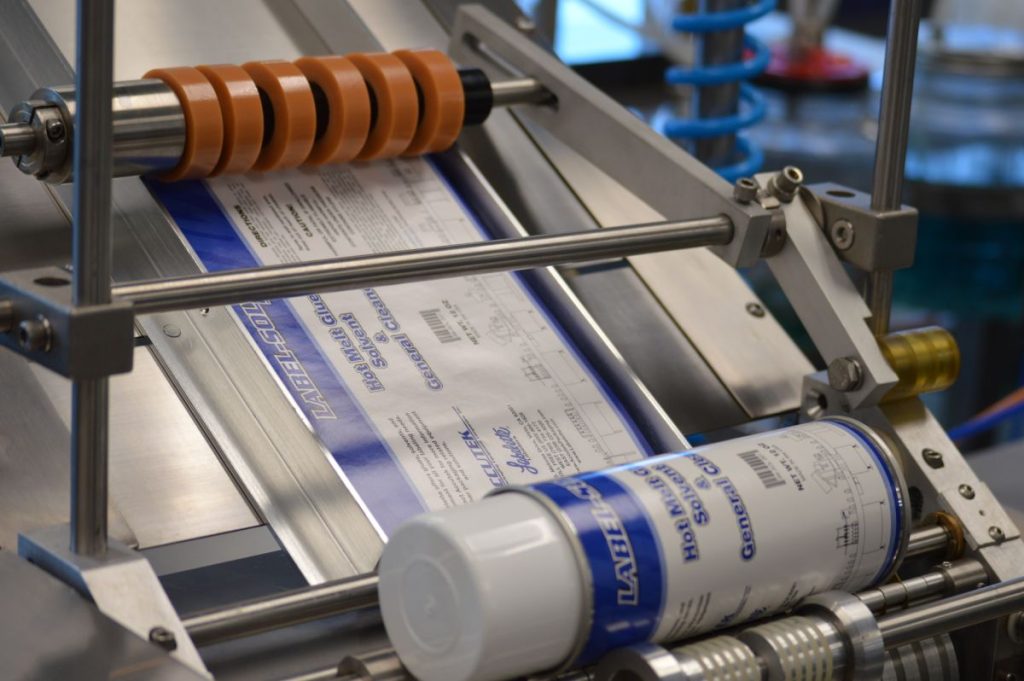
Hot glue labelers use partially melted adhesive, which is later cooled, to stick labels onto containers. What makes them so advantageous is that they can apply labels at high rates and can handle all sorts of container sizes and shapes. So if you have non-traditional bottle shapes and sizes, a hot glue labeler can handle it.
Sleeve labelers, or sleevers, can provide full-body labeling along with tamper evidence. Tamper-evident labels, when clearly broken or damaged while still on store shelves, can warn your customers to buy a different drink than the one they were about to, or to call and request a replacement.
Then there are rotary labelers, machines that tend to be larger powerhouses that can handle significantly more products than a standard machine. Due to their size and efficiency, they tend to be more expensive and also take up a lot of physical space. But they can label significantly more beer than the competition.
Factors Determining Your Optimal Bottle Labeling Machine
Like when choosing between semi-automatic and automatic labelers, your choice will come down to your specific manufacturing needs. Say that you own a high-end brewery, and you’re putting out a lot of beers. And you’re popular and successful to the point that you’re stocking in local grocery chains and major drink franchises, like BevMo. How are you going to meet such a demand? In that case, you probably want something like a rotary labeler.
But that’s just looking at it generally. Let’s break down individual circumstances and how they can affect your choice for a labeler.
Container Variability
Again, your container’s size and shape are going to have a sizable impact on your choice of labeler. The standard 16 oz can isn’t going to be a problem; it’s small, it’s standard, and it’s consistent. Most labeling machines can probably handle something like this.
But if you’re selling your apple-flavored ale in a glass container that looks like an apple that’s had a chunk bitten out of it, chances are, you’re going to want to go for something more precise. Like a sleeving machine or a tamper-evident bander that’s paired with a heat tunnel for superior wrap shrinkage.
And what if you’re labeling cold, damp containers? What if your labels won’t stick to them? In that case, you’ll need to find a machine that’s capable of sticking partial or full wraparounds around such a container.
Label Material
Going off what we just discussed about cold, damp containers, another factor to consider is the type of material(s) your labels are made of. Are they made of paper and need to be adhered with glue? Are they transparent wraparound labels that need to be shrunk on? Or something else?
Your label materials will be a major determinant when deciding on a labeler.
Production Volume and Speed
How many labels do you need to apply per hour? How many containers do you need to ship out in a given day?
It’s a good idea to get these numbers nailed down, especially before you decide to spend an even bigger number on a machine. If you want to get more containers out there faster, you’re going to need an automatic labeler, like Accutek’s own APS-106 or APS-108.
Equipment Integration
Do you already have production equipment for your drinks? Fillers, conveyors, other material handling systems? If so, then it’s important to make sure that the labeler you’re looking for can integrate with them.
A larger automatic machine is best for a completed line, while something semi-automatic will work if you don’t have a substantial production line already in place.
Take a look at what you already have and take some notes to discuss with the company you eventually purchase from. That information can help them find what you need.
Recommendations for Labeling Machines
At this point, you may be thinking, “C’mon, Accutek. I need an actual, specific recommendation for what labeler to buy.” Fear not, crafter of the custom beer.
We recommend the APS-108, an automatic wraparound labeler that’s consistent, sturdy, and efficient. It’s a wrap-around labeler with a mounted conveyor, easily able to handle most containers and able to apply labels up to eight inches wide. We also offer its sibling, the APS-106, which can handle labels up to 5.75 inches wide.
If you’re looking for continuous operation without having to pause and stop to reload a reel of labels, you can do that with the APS-206. It is similar to the 106, but comes with an additional labeling station. That way, when you run out of labels on the first station, the second will pick up the slack while you reload the first, allowing for continuous labeling.
And if you’re looking to label growlers or two-sided bottles, we’ve got the APS-208 for that. It features two labeling heads that are oriented opposite each other for two-sided labeling.
If your labeler will be integrated into an existing packaging line, we can usually upgrade you to a star-wheel indexing system. This plastic spacing wheel can hold back the flow of a larger system to ensure that your craft beverages are labeled correctly.
| Labeler | Labeler Type | Best For | Minimum Labeling Width | Maximum Labeling Width |
| APS-106/108 | Pressure-sensitive | Round containers | .5” | 5.75”/8” |
| APS-206/208 | Pressure-sensitive | Round containers (running continuously) | .5” | 5.75”/8” |
| SL1-150 | Compact sleever | Cylindrical/tapererd containers | .63” | 5.91” |
| SL1-350 | Compact sleever | Cylindrical/tapererd containers | 5.91” | 11.81” |
| SL2-200 | Compact sleever | Cylindrical/tapererd containers | .63” | 7.87” |
| Labelette HG | Hot glue | Round cylindrical containers | 1.75” | 7.75” |
Brewing Company: Want to Learn More?
If you’re looking to delve deeper into labelers and how they can improve the quality of your craft business’s offerings, then look no further than Accutek Packaging Equipment Company, Inc.. In addition to the labelers we’ve already discussed, we also have various fillers and cappers that can more than fulfill your beverage production needs.
Feel free to contact us today or browse around our newly refurbished website to check out our catalog of machines, their specifications, and their many capabilities.
