 (760) 734-4177
A filler can boost efficiency, minimize waste, and ensure consistent product quality for your production line. But the major question is: Which kind of filler do you need? What will best suit your operations?
Gravity filling machines and piston filling machines are two types of fillers worth considering adding to your tools. Each offers unique advantages depending on the product being filled.
Understanding how these two types of filling machines work and when to use them will help you make an informed investment for your packaging line.
Let’s look a little deeper at these two species of filler.
How Gravity Filling Machines Operate
Gravity fillers use gravity, as the name implies, to fill containers. A tank containing the product is positioned above the filling nozzles, and liquid flows downward into the containers until they reach a set level or volume.
This kind of filling works best for liquids with lower viscosities, like:
- Water, juice, and other beverages
- Thin sauces and dressings
- Cleaning solutions or solvents
- Essential oils and other non-viscous cosmetic products
Because gravity is doing most of the work, these machines are mechanically simple, energy-efficient, and relatively low-maintenance. They’re also cost-effective, which is particularly important if you’re a startup or you work with high-volume, but simple, liquid products. They’re also good for filling large quantities of liquid.
Gravity fillers do have some drawbacks, though. They aren’t ideal for thicker or chunkier liquids, which can clog nozzles or cause inconsistent fill levels. If your product doesn’t flow easily under gravity, you’ll likely need a different type of filling machine. Like (you guessed it) a piston filler.
How Piston Filling Machines Operate
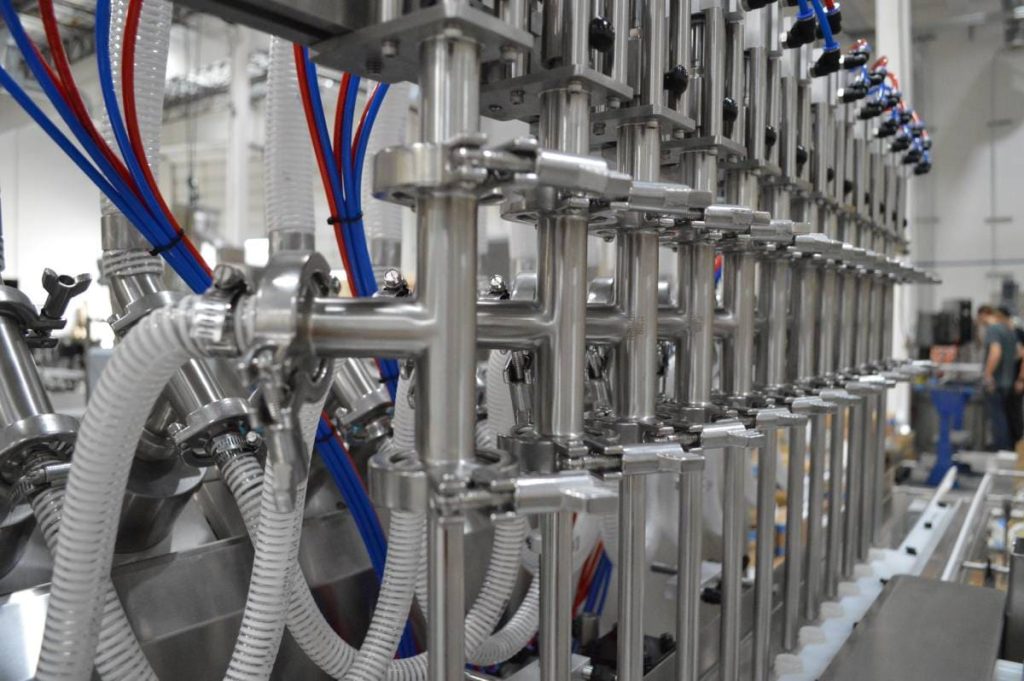
How piston fillers work is that they use piston motors to extract product from a holding tank. The product is then pushed into containers with controlled force. The piston’s stroke length (essentially, how far it retracts) determines the fill volume.
Piston fillers are perfect for medium- to high-viscosity products, including:
- Honey, syrups, and molasses
- Lotions, creams, and gels
- Sauces, pastes, and dips
- Shampoos and detergents
Because they apply mechanical pressure rather than relying on gravity, piston fillers can handle thicker or chunkier products that would otherwise stall in a gravity filler.
These machines are best if you want precision and flexibility, especially if you work in an industry where product consistency and quality directly affect your brand’s reputation.
Choosing Between Gravity and Piston Fillers
The best filling machine for your operation depends on your product’s viscosity, particulate content, and production goals.
If you’re packaging a variety of products or plan to expand your product line in the future, investing in a piston filler can provide long-term flexibility. But for simple, high-speed liquid lines, a gravity filler may be the most cost-effective and efficient option.
Find the Perfect Filling Solution for Your Product
Contact Accutek Packaging Equipment today to speak with one of our packaging specialists. We’ll help you evaluate your product’s characteristics, production goals, and budget to determine whether a gravity or piston filling machine is the best fit for your line.
With Accutek’s experience and engineering expertise, you’ll have confidence that your filling system is built for accuracy, reliability, and long-term performance.
