 (760) 734-4177

Choosing the Perfect Filling Machine for Shampoo, Lotion, and Other Personal Care Products
Filling your cosmetics and other personal care products isn’t as simple as working shampoo through your hair. There are important factors to consider, like your product’s viscosity, whether or not it foams, and the type of container you want to fill it with.
That leaves the question: What is the best type of filling machine for my personal care product?
Accutek Packaging designs and builds fillers that can easily handle all kinds of cosmetic products. But which one is the best for your needs? This article will help you figure that out.
What Cosmetic Products Are You Filling?
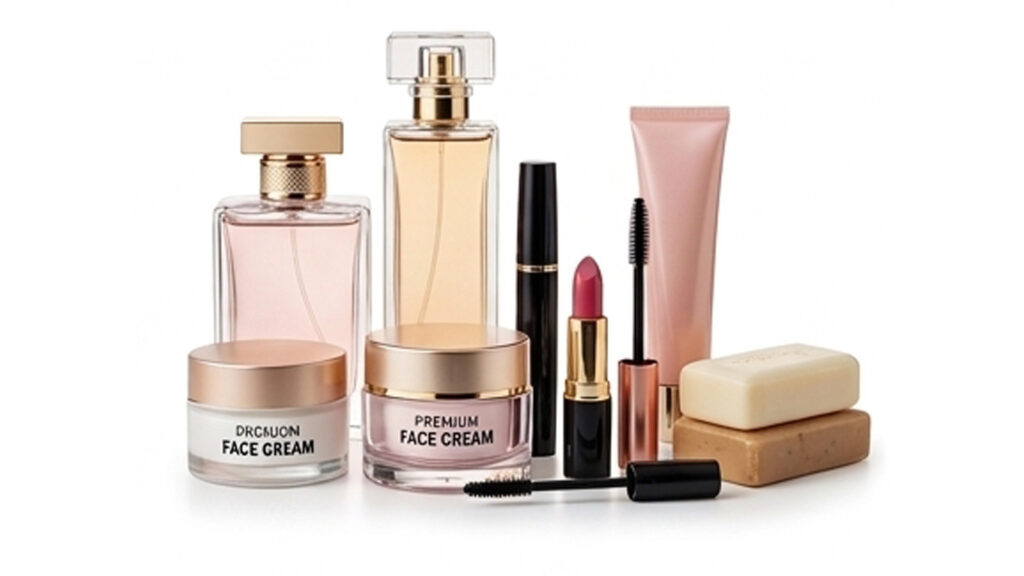
The operative question is: what are you filling? Lotions? Shampoo? Serums? Perfumes? Body sprays?
It may go without saying, but each product type has noticeably different physical properties that affect how it behaves when filled. For example, a thick cream may be well-suited for one type of machine, but will not work as well with another.
Let’s take a closer look at these physical properties.
Considering Viscosity, Foaming, and Bottle Shapes
One of the most significant factors you need to consider is your product’s viscosity. Think of viscosity as a measurement of how thick your product is; it can be measured in centipoise (cP). Another way of looking at it is to what degree your product resists motion.
For example, water has a low viscosity. It moves easily, making it compatible with virtually every kind of filling machine.
Then you have something like facial cream, which might have a much thicker viscosity. You can scoop out an entire solid chunk on your finger, and it won’t go anywhere. Because of this, only some types of fillers are equipped to deposit it into containers.
It’s important to get the right viscosity for your product so it adheres like it’s supposed to and feels good against your customer’s skin.
However, if your product has a high viscosity, that might make it difficult for a filler to process. It could get stuck, and then you’re stuck having to scoop out or otherwise force through the product.
There’s also the issue of foaming. This is caused by surfactant ingredients in your product(s), as well as exposure to air. As your product moves and/or is mixed, it can foam up. And when you go to fill your container(s) with product, you have waste product falling out as foam.
Foaming tends to be more common with lower-viscosity products, like serums and some creams, since air bubbles can rise and escape more easily.
Then there’s the issue of what you’re going to be packaging your product in. What shape and size of bottle are you using? Is it large? Small? Tall? Short? Thin or thick-necked?
Some types of machines are better-suited for certain types of containers over others. For example, a smaller pump filler is better for a series of small bottles of fragrance than a large automatic piston filler, which is better suited for larger bottles with thicker products.
Types of Filling Machines
Fillers, like some other types of packaging machines, can generally be divided into two categories: automatic and semi-automatic.
Automatic fillers tend to be larger and more expensive, but since they are likely to be equipped with conveyors, they can be paired with other machines—cappers, labelers, more conveyors, et cetera—in a complete packaging line. You can fill your container up with product, hands-free and with greater consistency.
Semi-automatic fillers tend to be cheaper and more compact, but you may not be able to integrate them into a full production line. Still, they are robust and can easily fill various kinds of cosmetic products.
Accutek has four different kinds of fillers that are excellent for filling cosmetics: timed flow, piston, pump, and vacuum fillers.
Timed Flow Fillers

Timed-flow fillers dispense a specific amount of product based on a set time. They’re best for low- to medium-viscosity liquids, like perfumes. They’re accurate, sanitary, and suitable for light, foamy liquids.
Piston Fillers
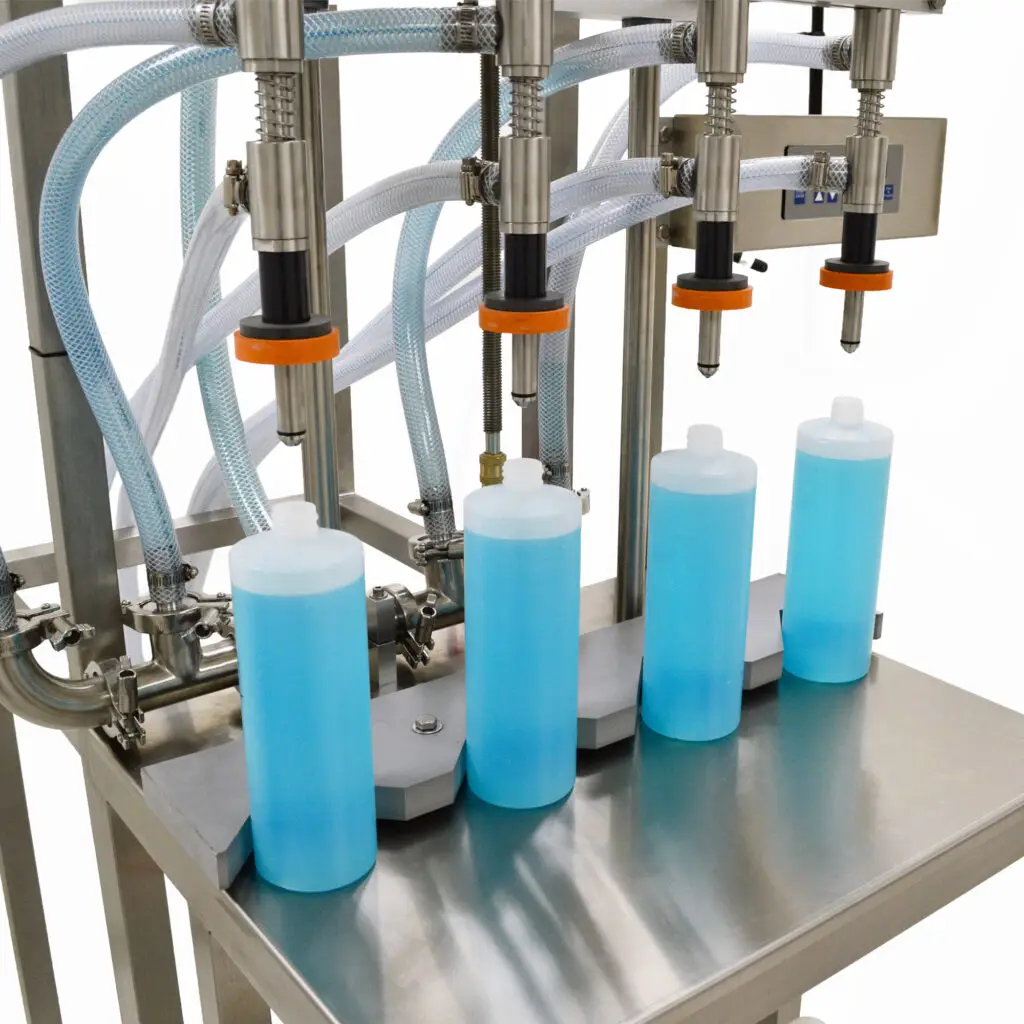
Piston fillers use positive displacement to deliver product. In other words, they push out the product through a nozzle. They’re great at filling thick products, high-viscosity products, and products with particulates.
These fillers are versatile and can handle thin, viscous, and foamy products. However, their piston technology makes them more expensive than our other fillers.
Pump Fillers
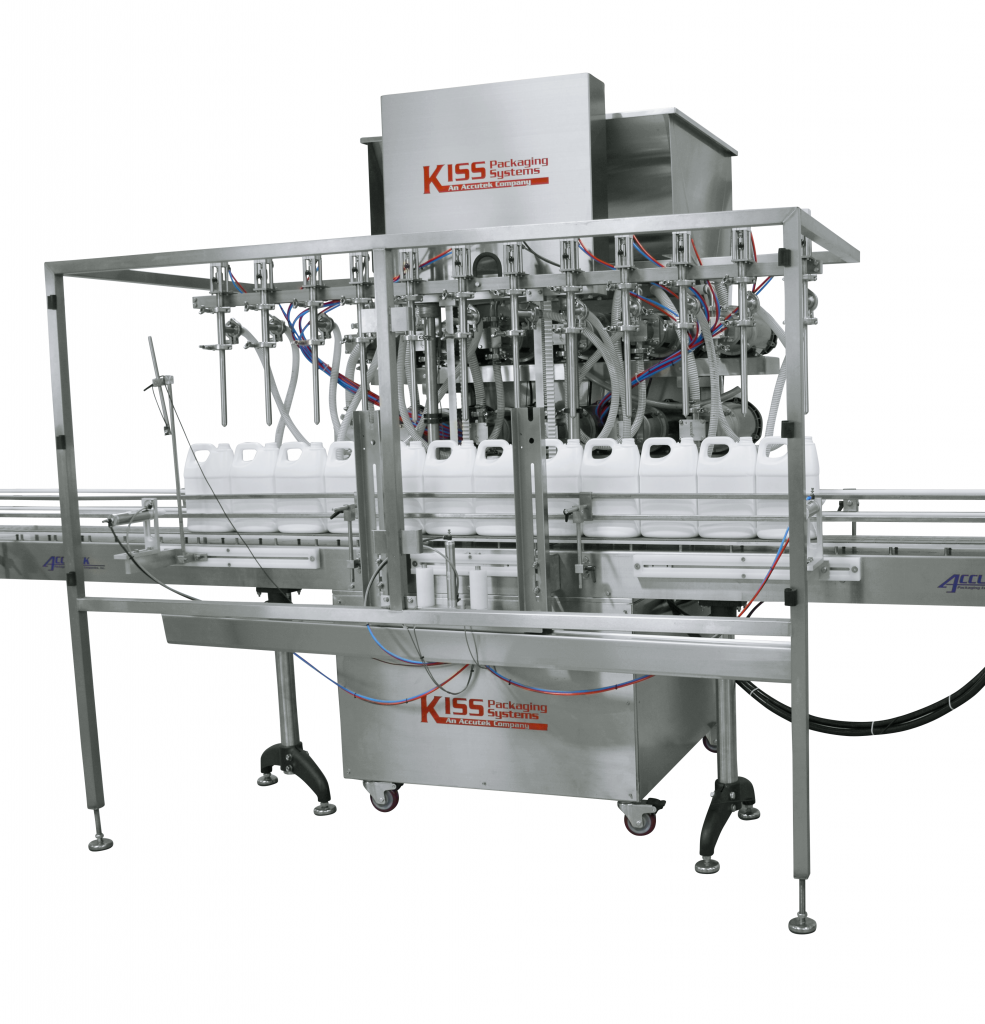
Pump fillers use servo pumps for precise filling. Instead of using pistons, they use controlled pump rotation to measure output. This allows for high accuracy and repeatable fills.
Pump fillers are optimal for both viscous products and thin liquids.
They’re good for pastes, creams, lotions, and gels, and can fill these products at faster speeds than piston fillers.
Vacuum Fillers

Vacuum fillers use vacuum pumps to draw liquids from a tank and deposit them in a container. This makes them excellent for foamy and caustic liquids with low to medium viscosity. They’re excellent for perfumes and nail polish.
How Do I Decide On a Liquid Filling Machine?
Now that you know which machines are optimal for what specific cosmetic products, you’ll need to take a step back and consider a few things.
Let’s say that you want to fill large quantities of facial cream. In that case, you probably want to go with an automatic piston filler, like Accutek’s AVF. An automatic piston filler can fill large amounts of viscous product, like lotions, at a consistent rate. If you don’t need to fill as many containers, an SVF is always an option.
Do you have any products that contain smaller chunks, like microbeads? In that case, a piston filler is also a prime choice.
But maybe you want to fill smaller amounts of thin nail polish. In that case, a good fit may be a semi-automatic vacuum filler, like the AccuVac.
The table below includes some examples of our fillers and their capabilities.
Overview of Fillers for a Cosmetic Bottling Line
| Filler Name | Filler Type | Typical Product(s) | Key Strength |
| Automatic Mini Pinch | Timed Flow | Perfumes, nail polish and remover | Multi-head, higher-speed filling |
| Auto-Indexing Mini Pinch | Timed Flow | Aqueous solutions, light oils | Multi-head, precise filling |
| AVF | Piston | Thick soaps, styling gels, face masks, lip balm | Multi-head, higher-speed filling |
| SVF | Piston | Lotions, creams | Single-head filling, smaller physical footprint |
| APD | Pump | Shampoo, conditioner, body wash, mascara, eyeliner, makeup remover | Multi-head, anti-splashing |
| SAPD-1 | Pump | Creams and lotions | Versatility, smaller physical footprint |
| Auto AccuVac | Vacuum | Perfumes, mists and sprays | Foam control, fill level control, higher-speed filling |
| Semi-Auto AccuVac | Vacuum | Perfumes, mists and sprays | Foam control, fill level control, smaller physical footprint |
Contact Accutek Packaging Equipment
Still unsure about which filler would be best for your product(s)? Contact Accutek today to learn more about our fillers and how they can improve your cosmetics packaging line.
