 (760) 734-4177


Vitamin gummy packaging lines typically combine several types of automated equipment to move containers, weigh product, apply closures, label finished packs, and verify quality. The exact configuration depends on the container format, production volume, and level of automation required.
Packaging Line Workflow
A standard packaging line for vitamin gummies usually follows this sequence:
- Containers are introduced to the line.
- Product is dispensed into each container.
- Closures are applied and tightened.
- Labels are applied.
- Finished containers are checked for accuracy and sent to the next stage of production or packing.
In automated systems, containers are moved by conveyors between stations. Additional equipment such as orienters, turntables, and rejection systems may be included depending on the plant layout and quality-control requirements.
Container Orientation and Feeding
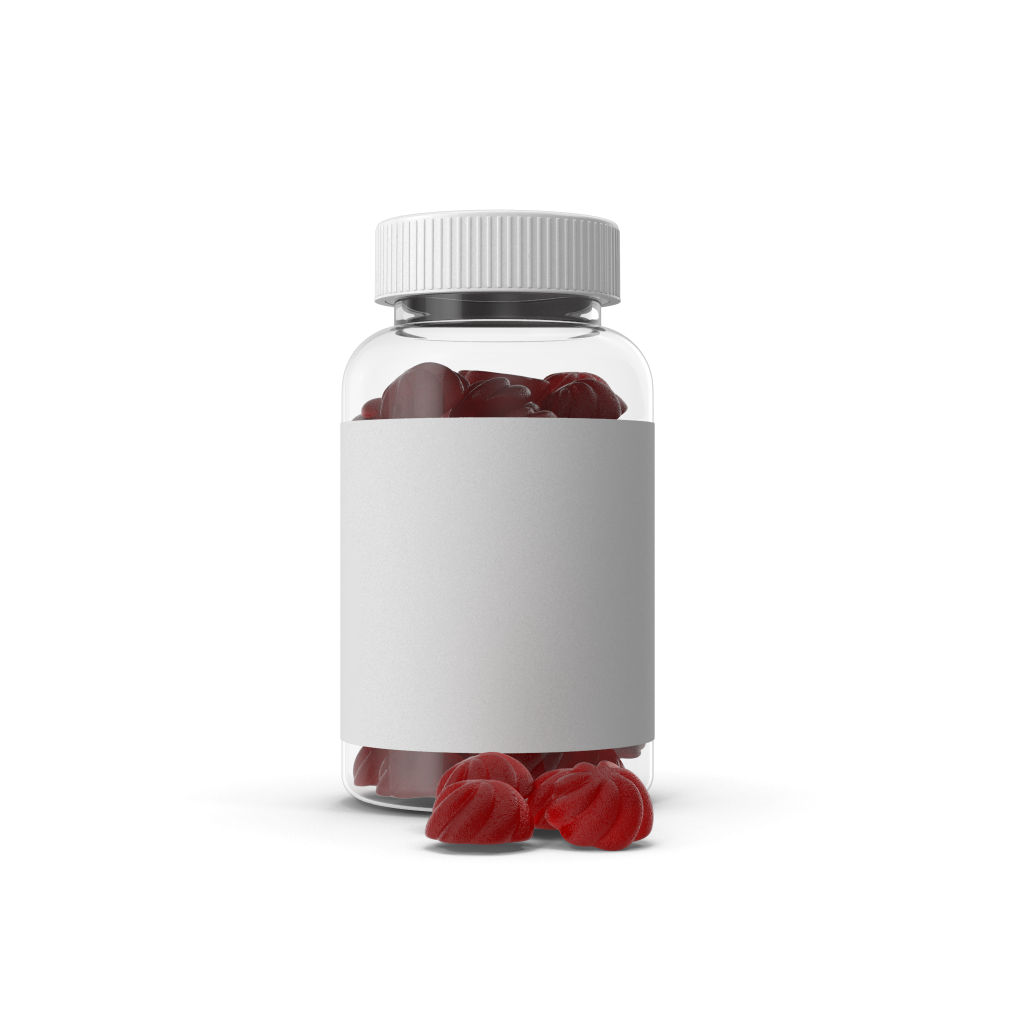
The first step in many lines is container feeding and orientation. Bulk containers may be loaded manually or transferred from a bottle orienter.
A bottle orienter accepts containers in a random bulk state and repositions them so they are upright and aligned for transfer onto the conveyor. This is typically done through mechanical guidance and a flipping or sorting mechanism. The purpose is to create a consistent container flow so downstream machines can process each bottle in a controlled way.
In some operations, containers may pass through a sterilization step before filling. A UV sterilizer can be used when surface treatment is required, although the need for this depends on the packaging environment and product requirements.
Filling Technology for Gummies
For vitamin gummies, a weight-based filler is often used instead of a volumetric filler. This is because gummies are irregular in shape, can vary in density, and are better measured by mass than by volume.
Vibratory Weigh Filling
A vibratory weigh filler uses vibration to move product from a hopper into weighing stations. The vibration helps regulate product flow so the system can dispense a controlled amount into each container. In a typical setup:
- An upper vibrator draws gummies from the hopper.
- A lower vibrator smooths the flow before weighing.
- The weighing system uses load cells to measure the product mass.
- The machine stops dispensing once the target weight is reached.
This method is suitable for dry, free-flowing products and helps reduce product damage. Unlike auger-based systems, vibratory delivery avoids mechanical compression, which is important for soft or delicate items such as gummies.
Multi-Head Operation
Some fillers use multiple fill heads or channels to increase throughput. These systems can fill more than one container at a time, improving cycle speed while maintaining target weight accuracy. Sensors may be used to detect container position, stop containers during filling, and release them once the correct amount has been dispensed.
Capping Systems
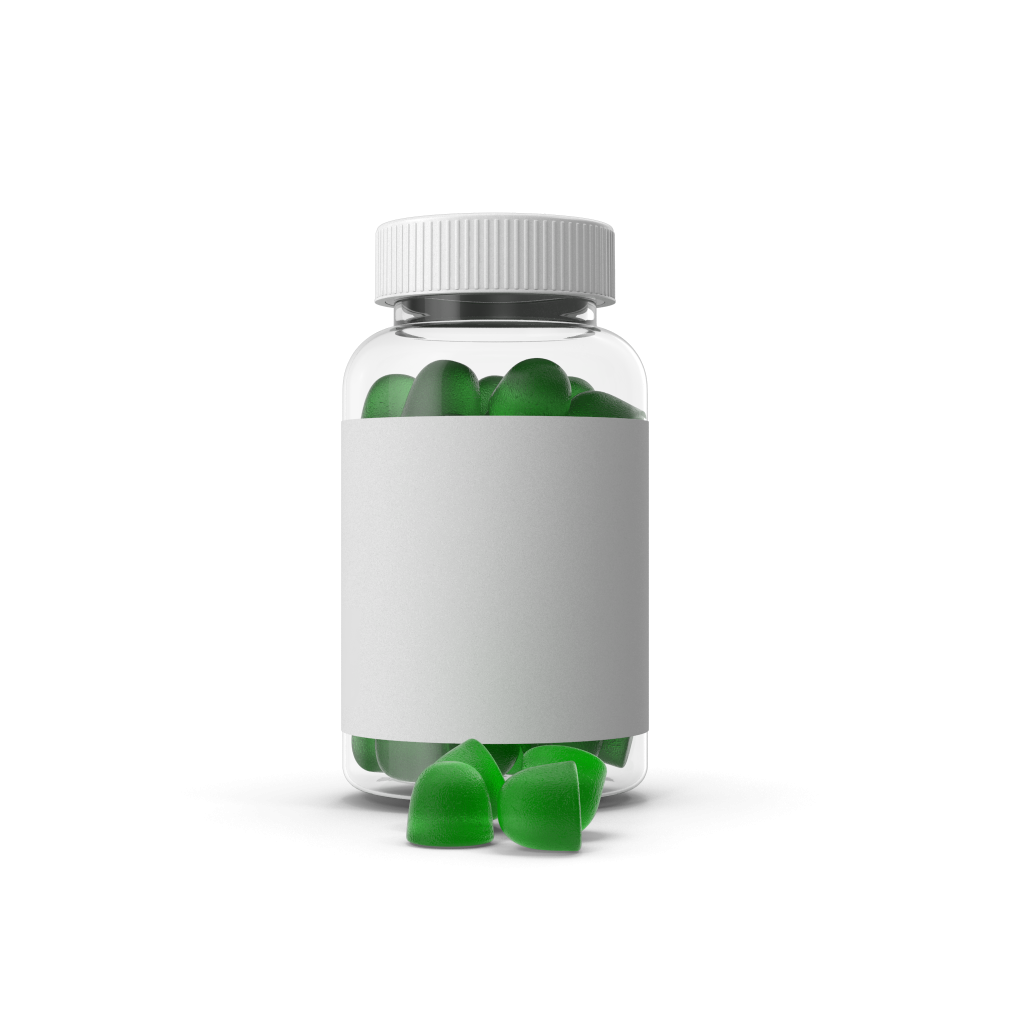
After filling, containers move to a capping station. The capper used depends on the closure type, container geometry, and production speed.
Semi-Automatic Capping
A semi-automatic benchtop capper is generally used in lower-volume operations. The operator places the container under a cap-tightening head, and a chuck mechanism grips the cap and applies torque to tighten it. These systems are simple and are typically used where output requirements are limited.
Automatic Spindle Capping
For higher-volume production, a spindle capper is commonly used. This type of machine applies screw-on or lug-style closures using rotating spindle wheels.
The process works as follows:
- Caps are fed into the machine from a chute or hopper.
- The closure is placed onto the container.
- The container passes through rotating spindle belts or wheels.
- The spindles apply friction and torque to tighten the cap.
This approach is suitable for continuous inline operation. Machines of this type can also be paired with a closure orienter or elevator, which helps feed caps into the system automatically.
Labeling Technology
Labeling adds product information, regulatory details, and identification marks such as branding or lot coding. The labeler selected depends on the container shape and label format.
Wraparound Labeling
Round containers often use wraparound labels. In this method, a pressure-sensitive label is applied to the container as it moves along the conveyor, then wrapped smoothly around the body of the bottle.
Machines in this category generally use:
- A conveyor to move containers through the labeling station.
- A label feed mechanism that dispenses labels from a roll.
- Sensors to detect container position.
- A pressure application system to ensure consistent placement.
Single- and Dual-Station Systems
Single-station labelers apply labels from one reel. Dual-station systems provide redundancy, allowing one station to continue running while the other is reloaded. This reduces downtime and helps maintain output in continuous production environments.
Form Fill and Seal for Gummy Pouches
Not all vitamin gummies are packaged in rigid containers. Some are packed in flexible pouches using a form-fill-seal system.
In this process:
- Heat-sealable film is pulled into the machine.
- The film is formed into a pouch shape.
- The bottom and side seals are created.
- The open pouch advances to the filling station.
- A measured amount of gummies is dispensed.
- The top seal is applied, often with date or lot coding.
- The finished pouch is cut and separated.
This method is typically used for flexible packaging formats and supports continuous operation at higher speeds.
Quality Control and Weigh Checking
After capping and labeling, finished containers may pass through a checkweigher or inspection system. This equipment verifies that the container weight falls within an acceptable range.
If a container is underfilled, overfilled, or otherwise out of tolerance, the system can divert it to a rejection station. This helps reduce the risk of nonconforming products moving further into distribution.
Material Handling Equipment
Material-handling equipment supports the movement of containers before and after the main packaging steps.
Turntables
Turntables can be used at the beginning of a line to accumulate bulk containers and feed them into the conveyor system. At the end of a line, they can serve as collection points for finished products. This reduces manual handling and helps maintain flow between processes.
Case Packing and Taping
For shipping preparation, case packers and case tapers may be used to group finished containers into transport-ready units. These systems automate the bundling, packing, and sealing of cases, which improves consistency and reduces manual labor.
Equipment Selection Factors
The most appropriate packaging equipment depends on several operational factors:
- Container type and size.
- Required production speed.
- Product sensitivity.
- Level of automation.
- Available floor space.
- Cleaning and sanitation requirements.
- Integration with existing machines.
In practice, a packaging line is usually designed around the product format and the required output rate rather than around a single machine.
Summary Table
| Equipment | Function | Underlying Technology | Common Use |
|---|
| Equipment | Function | Underlying Technology | Common Use |
|---|---|---|---|
| Bottle orienter | Aligns containers upright | Mechanical sorting and flipping | Container feeding |
| Vibratory weigh filler | Dispenses gummies by weight | Vibratory feed + load cells | Accurate dry-product filling |
| Semi-automatic capper | Tightens caps manually or semi-automatically | Chuck-based torque application | Lower-volume packaging |
| Spindle capper | Applies screw or lug closures | Rotating spindle wheels | Inline automated capping |
| Pressure-sensitive labeler | Applies labels from a roll | Conveyor, sensors, label feed system | Bottle labeling |
| Form-fill-seal machine | Creates and fills pouches | Film forming, sealing, metered filling | Flexible packaging |
| Checkweigher | Verifies fill weight | Load cell measurement | Quality control |
| Turntable | Collects or feeds containers | Rotating accumulation platform | Material handling |
Additional Information on Equipment Selection
Selecting packaging equipment for vitamin gummies depends on several operational factors, including container type, production speed, level of automation, available floor space, and sanitation requirements. Manufacturers often compare machine specifications and line configurations to determine which setup best fits their production process.
Equipment compatibility with existing machinery is also an important consideration. In many cases, final system design depends on the dimensions of the packaging area, integration requirements, and the desired level of output.
